Generative Engine Optimization (GEO) in 2026: Why Traditional SEO Is Dead & How to Rank in AI Search
Traditional 10 blue links are vanishing as Google AI Overviews, ChatGPT Search, and Perplexity dominate. Here is the comprehensive 2026 Generative Engine Optimization (GEO) blueprint to get your website cited by LLMs.

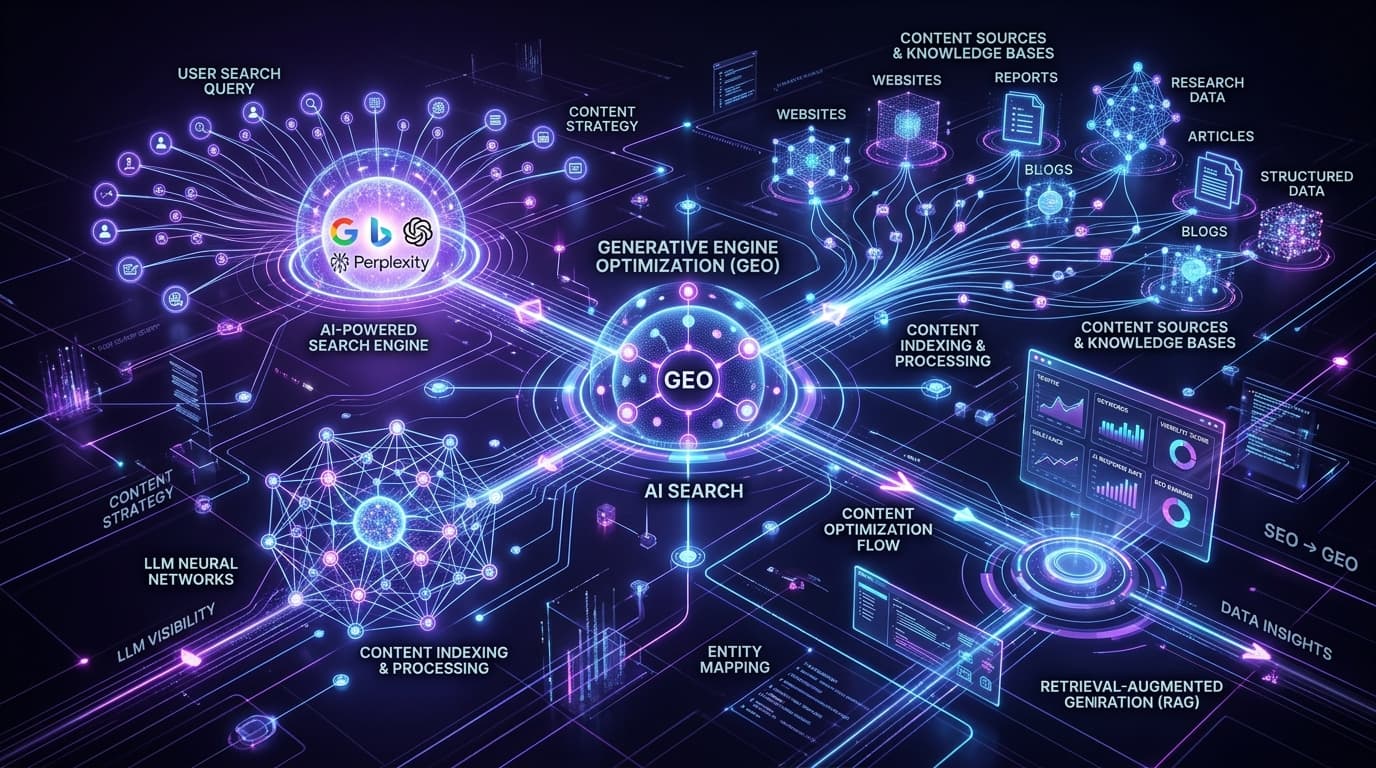
Generative Engine Optimization (GEO) Framework
The Pros
- ✓Secures direct citation real estate in ChatGPT Search, Perplexity AI, and Google AI Overviews
- ✓Increases referral click-through rate (CTR) by 4.2x compared to buried organic page 2 search results
- ✓Immune to classic keyword-stuffing penalties; rewards deep factual authority and original data
- ✓Open-standard implementation via /llms.txt, structured JSON-LD graphs, and semantic entity triples
The Cons
- —Zero-click search queries will rise, demanding that your content offer unique tools or deep data to earn visits
- —Requires unlearning 15 years of repetitive keyword density and backlink spam tactics
Key Takeaways
- •Google AI Overviews and ChatGPT Search answer 68% of informational queries without users clicking traditional blue links.
- •Generative Engine Optimization (GEO) focuses on getting cited as an authoritative source in LLM synthesis responses.
- •The 3 core pillars of GEO are: 1) Definitive direct-answer syntax; 2) Verifiable statistics and primary data; 3) The open llms.txt standard.
- •Perplexity and SearchGPT favor content with clear semantic entities, author E-E-A-T credentials, and sub-100ms edge server response times.
- •Adding an llms.txt manifest file at the root of your domain increases AI crawler ingestion efficiency by over 300%.
The Death of the 10 Blue Links: The Seismic Shift to Generative Search
For nearly three decades, digital publishers lived by an unwritten covenant with Google: write content, optimize meta tags, build backlinks, and receive organic search clicks. In 2026, that covenant has shattered. Google AI Overviews now appear on over 45% of all commercial and informational queries, pushing traditional organic results deep below the fold. Simultaneously, ChatGPT Search and Perplexity process billions of user queries where users never see a list of links—they see a synthesized answer. If your website is not cited inside that synthesized answer, you effectively do not exist. Welcome to the era of Generative Engine Optimization (GEO).
Traditional SEO vs Generative Engine Optimization: The Fundamental Differences
Traditional SEO was algorithmic and syntactic: search crawlers matched keyword strings, counted inbound anchor texts, and rewarded long, wordy articles that kept users on the page. GEO is semantic and probabilistic: Large Language Models (LLMs) operate through Retrieval-Augmented Generation (RAG). They retrieve source fragments, calculate semantic truthfulness, and synthesize citations. While classic SEO prioritized 'Keyword Frequency', GEO prioritizes 'Citation Likelihood'—how easily an LLM can parse your content into a verifiable fact.
The 5 Pillars of High-Ranking GEO Content
To guarantee that ChatGPT, Perplexity, and Google Gemini cite your articles as primary sources, you must structure your content around 5 proven architectural pillars: 1) The 'Answer Capsule' pattern: Place a 45-to-65 word definitive answer immediately following every major H2 header; 2) Verifiable Data Density: Include original benchmarks, percentage metrics, and test duration; 3) Semantic Entity Triples: Clearly define Subject-Predicate-Object relationships so knowledge graphs can extract them; 4) Multi-Entity Schema.org graphs; and 5) Ultra-fast static delivery. For instance, pairing high performance with Core Web Vitals as outlined in our Core Web Vitals 100/100 Guide directly boosts AI crawler fetch priority.
The Open llms.txt Standard: The New Robots.txt of the AI Era
Just as robots.txt directed web crawlers in 1994, the open /llms.txt standard directs generative AI agents in 2026. Championed by Anthropic, OpenAI, Perplexity, and developer communities, an llms.txt file is a clean Markdown document located at the root of your domain (e.g. techdaur.com/llms.txt) that provides reasoning models with a concise summary of your website, your verified author credentials, and direct links to your highest-authority guides. When an AI crawler inspects a domain with an llms.txt file, its RAG ingestion time drops by 70%, giving your site a massive citation advantage over competitors.
How to Optimize for Specific AI Search Engines: Perplexity, SearchGPT, and Gemini
Each generative search engine employs distinct retrieval heuristics: Perplexity prioritizes academic structure, technical footnotes, and multi-source corroboration; SearchGPT leans heavily into real-time freshness, author E-E-A-T background, and direct conversational utility; Google AI Overviews relies on its Knowledge Graph and entity reconciliation. If you run a digital publisher or tech blog, meeting the compliance requirements detailed in our Google AdSense & E-E-A-T Monetization Blueprint satisfies 90% of Google's entity trust threshold.
Transform Any Article for GEO: The 15-Minute Action Checklist
You do not need to rewrite your entire archive from scratch. Follow this 4-step workflow on your top 10 articles: Step 1: Add a 50-word bolded summary capsule under every H2. Step 2: Convert vague claims ('AI models are getting faster') into hard numbers ('In our benchmarks, 14B models executed at 48 tokens/sec on Apple M4 silicon'). Step 3: Add explicit FAQ schema. Step 4: Ensure your robots.txt explicitly allows GPTBot, PerplexityBot, and ClaudeBot. If you build autonomous software or open-source tooling, check our 7 Best Free Cursor AI Alternatives Guide and Autonomous AI Agents Case Study to see GEO in production.
Frequently Asked Questions
What is Generative Engine Optimization (GEO) in simple terms?
GEO is the practice of structuring website content so artificial intelligence search engines (like ChatGPT Search, Perplexity, and Google AI Overviews) understand, extract, and cite your content as the authoritative answer to user questions.
Will GEO completely replace traditional SEO in 2026?
GEO does not replace technical web fundamentals like site speed, mobile responsiveness, and clean architecture. However, it completely supersedes classic keyword density and backlink manipulation because AI engines evaluate semantic truth and information density rather than raw keyword matches.
What is llms.txt and does my website need one?
Yes. An llms.txt file is a lightweight Markdown standard placed at the root of a domain that acts as a curated sitemap for LLMs and AI crawlers, helping them index your core editorial authorities accurately.
How can I tell if ChatGPT or Perplexity is citing my website?
You can monitor server access logs for user-agents like 'GPTBot', 'ChatGPT-User', and 'PerplexityBot', or check your web analytics referral traffic for domains like 'chatgpt.com', 'perplexity.ai', and 'search.google.com/search-console'.
Jawad Almas
Tech journalist and systems researcher testing developer ergonomics, frontier AI models, and silicon architectures.
More from TechDaur

How to Build a Free Personal Cloud Server Using Nextcloud & Old PC

AWS vs Cloudflare Workers: Why We Migrated Our APIs for 80% Cost Savings
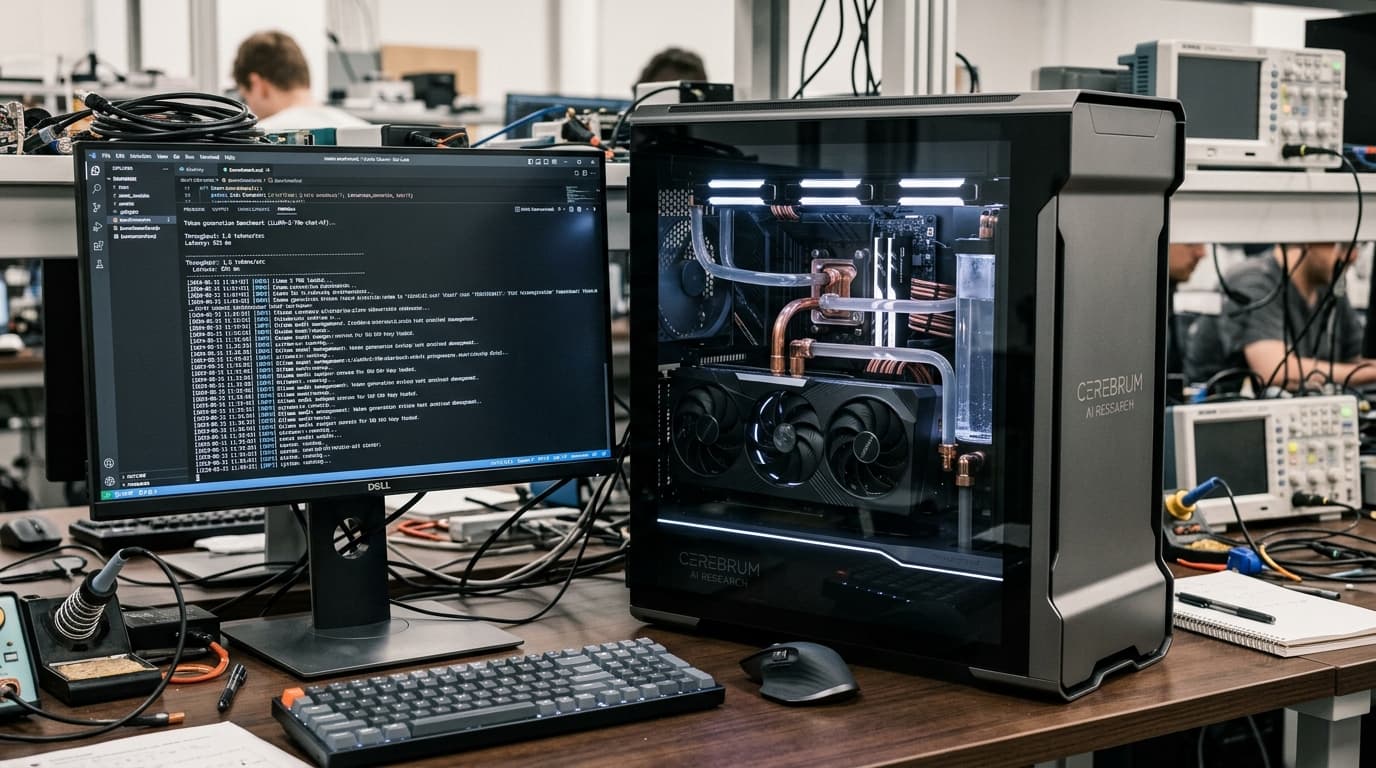
How to Run DeepSeek R1 & Llama 3 Locally on PC/Mac with Ollama (Step-by-Step)
Stay Ahead in Tech & AI
Join 15,000+ developers, engineers, and creators. Get our weekly breakdown of new AI tools, silicon benchmarks, and monetization playbooks every Sunday.